




25,83€
Em stock
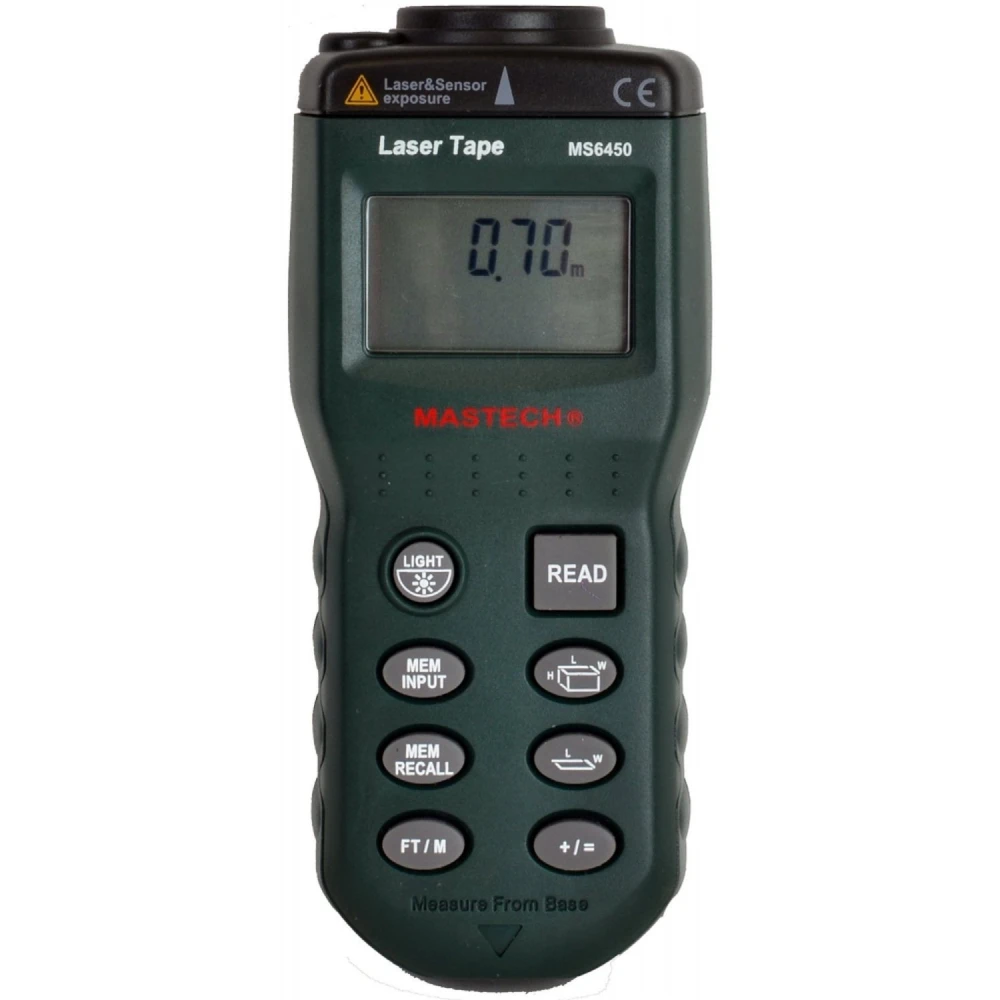
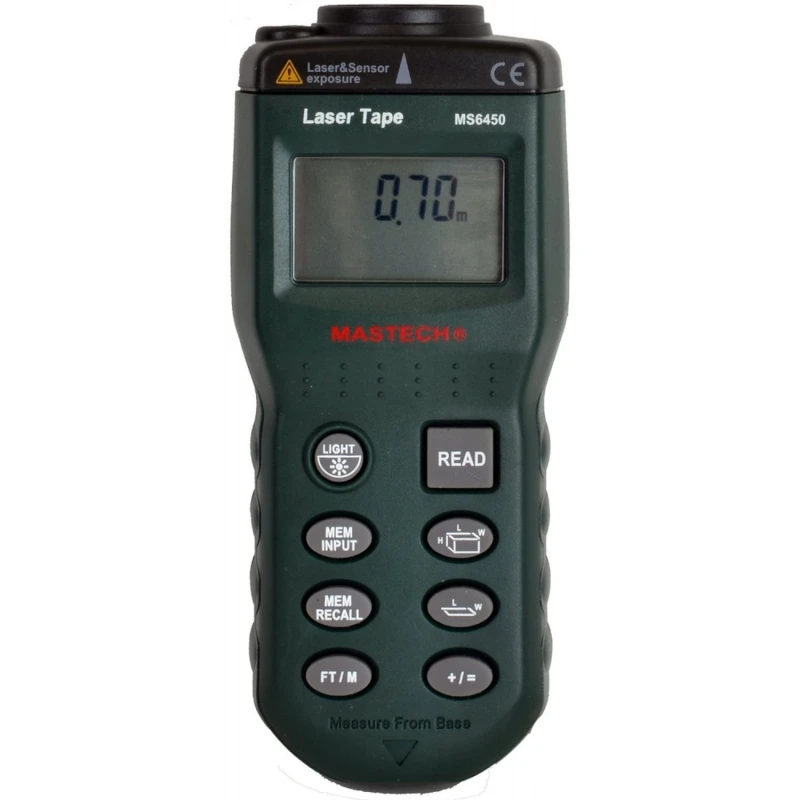
Medidor de distâncias ultrassónico Mastech MS6450 com laser
Marca: Mastech
25,83€
IVA incluído (S/ IVA: 21,00€)
Stock limitado
Entrega padrão
Qua, Abr 22 - Sex, Abr 24
Entrega expresso
Seg, Abr 20 - Ter, Abr 21
Devoluções em 30 dias
Devoluções gratuitas em 30 dias
Transação segura






Share:
Entrega grátis
Em encomendas superiores a 60€
Devoluções fáceis
Política de devolução de 30 dias
Pagamento seguro
Checkout 100% seguro
Garantia de qualidade
Apenas produtos originais
O Medidor de Distâncias por Ultrassons com Apontador Laser Mastech MS6450 é um instrumento de medição concebido para oferecer precisão e facilidade na medição de distâncias em diferentes ambientes. Graças à sua tecnologia de ultrassons combinada com um apontador laser vermelho, permite medir com exatidão pontos específicos de 0,6 até 15 metros.
Características principais:
- Modelo: MS6450
- Rango de medição: 0,6 a 15 metros
- Precisão: ± 0.5% ± 1 dígito
- Resolução: 0,01 metros
- Ângulo de abertura: aproximadamente ± 5 graus
- Tipo de diodo laser: Vermelho 650nm
- Fonte de alimentação: 1 bateria 6F22 (9V)
- Duração da bateria: até 10 horas de uso contínuo
- Cálculo de área e volume: Sim, permite medir áreas e volumes facilmente
- Medição em pés ou metros: configurável conforme a necessidade
- Ecrã retroiluminado: facilita a leitura em ambientes com pouca luz
- Dimensões: 136 mm × 59 mm × 38 mm
- Peso: aproximadamente 150 gramas, incluindo bateria
- Rango de cálculo máximo: comprimento 9999 m, área 99999 m², volume 99999 m³
Utilizações típicas:
- Medição rápida e precisa de distâncias em construção e remodelações.
- Cálculo de áreas e volumes para projetos de arquitetura ou engenharia.
- Medição em espaços interiores e exteriores graças ao seu apontador laser.
- Ideal para técnicos, instaladores e profissionais que necessitam de medições fiáveis.
Compatibilidade e facilidade de utilização:
O medidor Mastech MS6450 é compatível com medições em pés ou metros, ajustável de acordo com a preferência do utilizador. O seu ecrã retroiluminado permite trabalhar em condições de pouca luz, e a sua bateria de 9V oferece uma duração prolongada para trabalhos contínuos. Além disso, o seu design compacto e leve facilita o transporte e o manuseamento.
Este equipamento é uma solução económica e eficiente para quem procura um medidor de distância eletrónico barato sem sacrificar precisão e funcionalidade.
- Rango de medição de 0,6 a 15 metros com elevada precisão
- Apontador laser vermelho de 650nm para maior exatidão
- Cálculo de área e volume integrado
- Ecrã retroiluminado para fácil leitura em ambientes escuros
- Fonte de alimentação com bateria 6F22 (9V) com duração até 10 horas
- Medição configurável em metros ou pés
- Design compacto e leve, peso aproximado de 150 gramas
Perguntas e Respostas de Clientes
What types of surfaces can affect the accuracy of the MS6450 ultrasonic distance meter?
Soft, absorbent or irregular surfaces (such as curtains, carpets or textured walls) can reduce the accuracy of the MS6450, as ultrasound requires a hard, flat surface to reflect properly. For best results, it is recommended to measure on smooth, solid walls.
Does the MS6450 backlit display allow clear reading outdoors or in strong sunlight?
The backlit display makes it easy to read indoors or in low-light conditions, but in direct sunlight visibility may be difficult, as it does not have high contrast designed specifically for outdoor use. It is recommended to shield the display from direct sun when taking measurements outdoors.
What is the absolute accuracy of the MS6450 at its maximum range of 15 metres, and how is that tolerance calculated?
The MS6450 offers electronic accuracy of ±0.5% of the measured value plus ±1 digit. For example, at 15 m, the maximum error margin would be 0.5% x 15 m = 0.075 m, plus 0.01 m for the digit, giving a total of ±0.085 m. The maximum expected tolerance is ±8.5 cm at maximum distance.
Is it possible to replace the MS6450 battery easily, and what is the main precaution to take?
The 9V (6F22) battery can be replaced easily by removing the rear cover. It is recommended to use quality alkaline batteries and avoid mixing old and new batteries. Make sure the meter is switched off before changing the battery to avoid accidental short circuits.
How does the MS6450 ultrasonic system compare with laser distance meters in terms of technical limitations?
Unlike laser distance meters, the MS6450 depends on the propagation and reflection of sound, which means lower accuracy and range (maximum 15 m), and greater sensitivity to environmental conditions. A laser distance meter can reach greater distances (up to 40 m or more) and maintain an accuracy of ±2 mm under almost any reflective surface condition, although it is usually more expensive.
What types of surfaces can affect the accuracy of the MS6450 ultrasonic distance meter?
Soft, absorbent or uneven surfaces (such as curtains, carpets or textured walls) can reduce the accuracy of the MS6450, as ultrasound requires a hard, flat surface to reflect properly. For best results, it is recommended to measure on smooth, solid walls.
Does the MS6450 backlit display allow clear reading outdoors or in strong sunlight?
The backlit display makes reading easier indoors or in low-light conditions, but in direct sunlight visibility may be difficult, as it does not have high contrast designed specifically for outdoor use. It is recommended to shield the display from direct sun when taking outdoor measurements.
What is the absolute accuracy of the MS6450 at its maximum range of 15 metres, and how is that tolerance calculated?
The MS6450 offers electronic accuracy of ±0.5% of the measured value plus ±1 digit. For example, at 15 m, the maximum error margin would be 0.5% x 15 m = 0.075 m, plus 0.01 m for the digit, giving a total of ±0.085 m. The maximum expected tolerance is ±8.5 cm at maximum distance.
Is it possible to replace the MS6450 battery easily, and what is the main precaution to take?
The 9V (6F22) battery can be replaced easily by removing the rear cover. It is recommended to use quality alkaline batteries and avoid mixing old and new batteries. Make sure the meter is switched off before changing the battery to avoid accidental short circuits.
How does the MS6450 ultrasonic system compare with laser distance meters in terms of technical limitations?
Unlike laser distance meters, the MS6450 depends on the propagation and reflection of sound, which means lower accuracy and range (maximum 15 m), and greater sensitivity to environmental conditions. A laser meter can reach greater distances (up to 40 m or more) and maintain accuracy of ±2 mm under almost any reflective surface condition, although it is usually more expensive.
Escrever uma avaliação de cliente
Clientes que compraram este artigo também compraram

Termómetro infravermelhos Mastech MS6522B com ponteiro laser (-20ºC a +500ºC)
30,75€
Só restam 5 em stock

Termómetro infravermelho Mastech MS6520A com ponteiro laser (-20ºC a +300ºC)
26,31€
Só restam 4 em stock
Artigos vistos recentemente
Medidor de distâncias ultrassónico Mastech MS6450 com laser
25,83€